Sittin' In by Jeff Gold
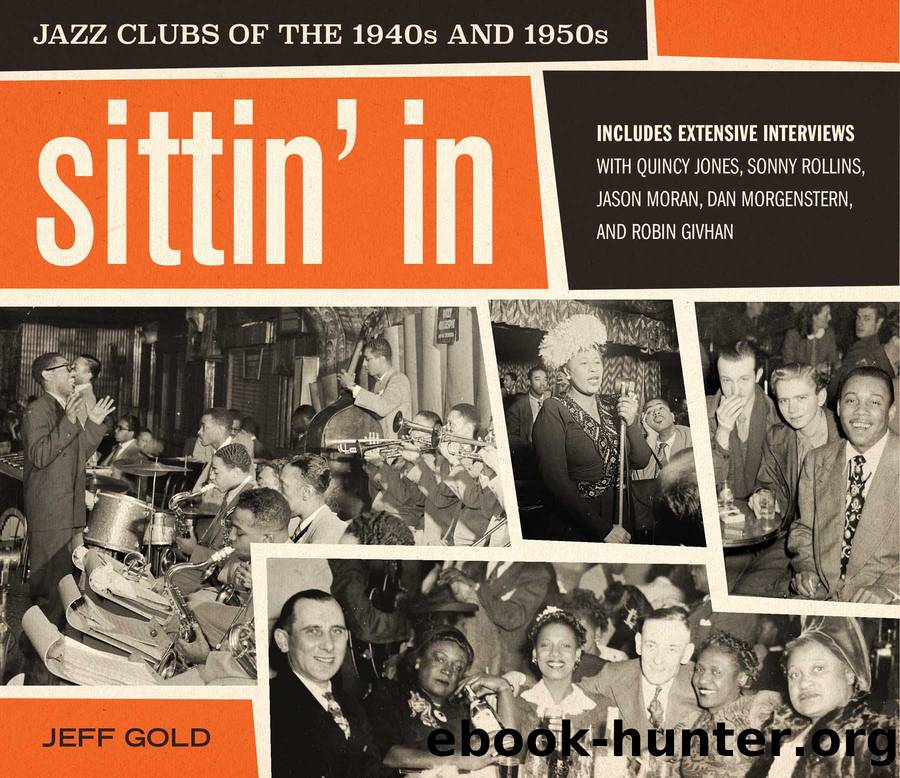
Author:Jeff Gold
Language: eng
Format: epub
Publisher: Harper Design
Published: 2020-09-17T00:00:00+00:00
JG: Yeah, you got into that with [owning your own] record label.
JM: Yeah, itâs a step. Because itâsâhow else?
JG: Makes all the sense in the world. The jazz scene of the 1940s and 1950s is very well documented and still fascinates fans and musicians and historians. Why do you think that is?
JM: I was saying this last night in thinking about Thelonious Monk. Itâs because they were predicting the change that would happen fifteen years later. And they predicted it in basements. They saw the future. But they were showing it to us in musical form. And they were showing us that there were many languages that may be spoken at once, and youâd have to follow really closely to understand it. And youâd have to give it time. And youâd have to understand that everyone was allowed that platform. Thatâs the ideal. I think thatâs part of what it is. I think that itâs part of one of the first generationsâI may be making, I am making this up, because we all are, weâre all making this up. You can hear Thelonious Monk in this Town Hall concert. You hear him in rehearsal, and heâs talking with his arranger Hall Overton about how he didnât want his band to sound like a big band, because the big band idea is too stiff. Now âstiffâ has many connotations. Stiff is restrictive, oppressive. You know, it has all those connotations built into it. Now we know heâs talking about a generation of big bands thatânot only the great big bands, but just the idea of the big bands is that you work in this wayâ
JG: And itâs very formatted.
JM: Yes, this [music] happens here. It happens every time. And he didnât want his large ensemble to feel this way. And he also says under his breath, âItâs not that I donât like it, I donât want to say that.â He says this. But itâs critical of the generation before him, right? Thereâs a critique in there that bebop addresses, with not forty people, all dressed up the same, kind of behind a platform with all these formatted music standsâ
JG: One guy calling all the shots.
JM: Yeah. [Bebop is a] small group in a basement. Pared down, showing you what recklessness looks like. And they do it in such a way because they rehearse it. Itâs kind of like modern dance, like, What the fuck? Theyâre not dancing! Thatâs not choreography! But you know, as you learn the language, you understand: Ah, oh my goodness! Whereas the big band shows it to you in visual form, we show it to you en masse. [Big bands have] twenty bodies on the stage, right? We have all these uniforms. We have these moves that everybody does. [Hums and stomps a tune.]
JG: A very controlled environment.
JM: [Humming.] HEY! HEY! HEY! You know, right? We have all that, which is a part of the party. Bebop is suggesting that weâre not just party. Weâre not just the party, weâre also complex individuals.
Download
This site does not store any files on its server. We only index and link to content provided by other sites. Please contact the content providers to delete copyright contents if any and email us, we'll remove relevant links or contents immediately.
The Goal (Off-Campus #4) by Elle Kennedy(13625)
Kathy Andrews Collection by Kathy Andrews(11777)
Diary of a Player by Brad Paisley(7531)
What Does This Button Do? by Bruce Dickinson(6176)
Assassin’s Fate by Robin Hobb(6173)
Big Little Lies by Liane Moriarty(5759)
Altered Sensations by David Pantalony(5080)
Pale Blue Dot by Carl Sagan(4968)
Sticky Fingers by Joe Hagan(4156)
The Death of the Heart by Elizabeth Bowen(3589)
The Heroin Diaries by Nikki Sixx(3525)
Beneath These Shadows by Meghan March(3285)
Confessions of a Video Vixen by Karrine Steffans(3283)
How Music Works by David Byrne(3239)
The Help by Kathryn Stockett(3127)
Jam by Jam (epub)(3060)
Harry Potter 4 - Harry Potter and The Goblet of Fire by J.K.Rowling(3038)
Computational Linguistics and Intelligent Text Processing: 20th International Conference, CICLing 2019 La Rochelle, France, April 7â13, 2019 Revised Selected Papers, Part I by Alexander Gelbukh(2968)
Strange Fascination: David Bowie: The Definitive Story by David Buckley(2842)
